What are spam traps?
"Spam traps" Spam traps (Spam Traps – also known as Honeypots) are used to identify and track spam emails. Anti-spam organizations, Internet service providers (ISPs), and corporations use spam traps to find spammers. They create and place trap email addresses all over the place. It is possible that by accident your customer list has their email address. When you send marketing, these organizations will receive your letter. And they spam your IP address or even your domain name as Blacklist. Affects the company is email reputation and transit.
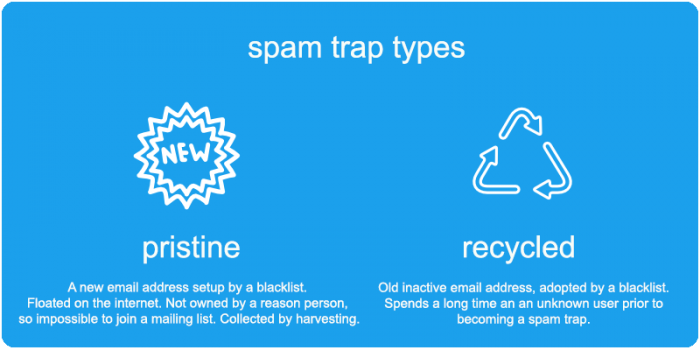
Types of spam traps – Spam traps
1. Basic Spam Trap
Email addresses are embedded in web pages by anti-spam organizations. So when spammers visit the website to grow their contact list. Spam traps are placed at the bottom of the list. Basic spam traps can also be found on buy or rent listings.
This is the most harmful spam trap. Often will list your domain to Blacklist or mark your IP as spam.
2. Spam trap recycling
Recycling spam traps usually register valid domain names or email addresses but have been set up for spam traps.
Some common examples are role addresses (sales@, info@, hotro@), or email addresses of employees who are no longer at the company...
The recycling spam trap is generally not as harmful as the basic spam trap. But it will still damage your submittal reputation over time.
3. Email is wrong format
Emails with common misspellings, such as “gmail” instead of “Gmail” or “Yaho” instead of “Yahoo” can also be used as spam traps. This could be an unintentional mistake by the registrant. But it can still lead to a spam trap lying in your contacts.
The consequences of malformed email spam traps are generally not as severe as basic spam traps. However, it shows that senders do not regularly clean their contact list. This can damage the sender is reputation.
How to prevent spam traps from entering the list?
There are a few ways to trap spam on your list. But the most common form often stems from neglecting to manage email lists, not sanitizing them periodically.
Spam traps can often be prevented by maintaining a healthy contact list. You should take the time to filter out the email addresses of your interested customers from your daily email marketing.
Here are some solutions to prevent your email list from falling into spam traps:
1. Stop buying email lists
Stop buying email lists now! Using a buying list almost guarantees that you will run into a spam trap. Not to mention that subscribers on buying lists are likely not interested in your service. And may mark received emails as spam or delete emails. All of these behaviors adversely affect the sender is reputation.
2. Get rid of malformed lists
To avoid malformed emails, spell-check the contacts in the list. Incorporate a life-and-death email checker into a customer is signup form to automatically check the legitimacy of an email address and prevent typos.
You should also use Opt out – Opt in in your campaign. The purpose is for customers to be able to refuse or subscribe to continue to receive information from you.
3. Email has not been used for a long time
Like mentioned earlier, spam traps sometimes originate from outdated email addresses that are no longer valid. If you do not get a response from a contact for a long time, it may have turned into an email spam trap.
What you need to do is that you have to set up an email campaign to confirm the customer is still interested in the service. Then remove the addresses that are no longer of interest to avoid falling into spam traps.
4. Set how often to clean your contact list
Eliminate contacts who have not joined your list in 3 to 6 months.
Reference: Instructions for cleaning email lists to avoid falling into Blacklist.
Remember that the purpose of spam traps is to catch spammers. So if you are worried about spam traps. The best way to avoid them is not to act like a spammer. This means:
Regularly check lists for typos and outdated emails.
Use opt-in to confirm that the recipient is the legitimate sender.
Maintain a healthy contact list.